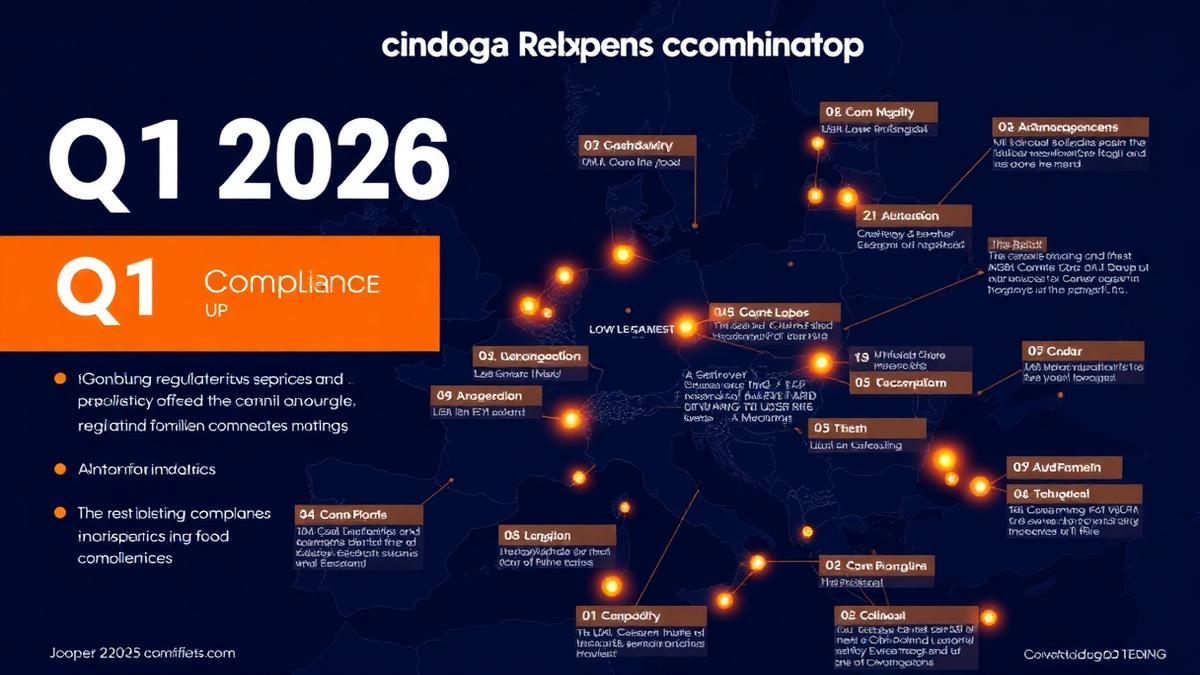
The first quarter of 2026 has witnessed significant strides and challenging impasses in the European iGaming regulatory landscape. As the industry continues its rapid evolution, compliance remains a paramount concern, driving both innovation and apprehension across operators, affiliates, and technology providers alike. This roundup highlights the most impactful regulatory shifts and discussions observed across major European markets, sketching a clearer picture of what the remainder of the year might hold.
Germany Navigates the Fine Line: Stability Amidst Stricter Enforcement
Germany, a market long characterized by its complex and often fragmented regulatory structure, is showing signs of both consolidation and heightened enforcement in Q1 2026. The Glücksspielstaatsvertrag 2021 (GlüStV 2021) continues to be the bedrock, but its interpretation and practical application are evolving. We're seeing a notable uptick in enforcement actions by the Gemeinsame Glücksspielbehörde der Länder (GGL). Several smaller operators have faced significant non-compliance penalties, primarily related to advertising restrictions, cross-operator deposit limits (even with schemes like LUGAS in place), and stricter KYC protocols.
"The GGL's proactive stance is no surprise," commented a senior legal counsel for a major European operator. "Their remit is clear: protect players and ensure market integrity. What we're seeing now is the GGL moving beyond initial warnings to demonstrably sanctioning those who fall short. Operators need to treat compliance not as a checkbox exercise, but as an integral part of their business strategy."
Furthermore, discussions are ongoing regarding potential amendments to the GlüStV 2021, particularly concerning the contentious topic of in-play betting for sports. While no immediate changes are anticipated in Q1, industry insiders suggest that a robust re-evaluation of current limits and product offerings could be on the agenda by Q3, potentially leading to more nuanced regulations rather than a wholesale loosening.
The Netherlands: Adjusting to the ‘Cooling-Off’ Period’s End
The Dutch market, which opened with considerable fanfare and then an abrupt "cooling-off" period for certain operators, is now fully past that initial phase. Q1 2026 has seen the Kansspelautoriteit (KSA) focusing heavily on reviewing the efficacy of responsible gambling measures implemented by licensed operators. The KSA’s recent reports indicate a particular interest in the practical application of player activity monitoring, self-exclusion schemes (CRUKS system analysis remains a priority), and the true impact of current advertising restrictions.
A notable development is the KSA's increased scrutiny of affiliate marketing practices. Following observed breaches in previous years, several key affiliates have either been delisted or heavily penalized for promoting unlicensed entities or for advertising practices deemed too aggressive. This signals a broader trend of regulatory bodies holding affiliates to a higher standard, blurring the lines of responsibility between operators and their marketing partners. Operators are now undertaking more rigorous due diligence on their affiliate networks, often demanding proof of compliance training and dedicated reporting on promotional methods.
Nordic Nuances: Sweden's Tightening Grip and Denmark's Open Dialogue
The Nordic region presents a diverse regulatory picture. In Sweden, the Spelinspektionen's commitment to consumer protection continues to manifest in increasingly stringent measures. Q1 2026 has seen a renewed focus on bonus restrictions, with subtle interpretations of what constitutes an "enticing" offer leading to warnings for several licensed entities. The government’s ongoing review of the gambling act, initially sparked by concerns over channelisation and problem gambling rates, is expected to conclude this year. While many operators anticipated a slight relaxation, current sentiment suggests that any changes will likely reinforce consumer protection, possibly introducing stricter affordability checks or further limiting direct marketing channels. The industry braces for potential adjustments to gaming speed and deposit limits, though these remain speculative.
"Sweden's approach is commendable for its clear focus on player welfare," remarked a public policy advisor specialising in gambling regulations. "However, the continuous tightening without sufficient consideration for market dynamics risks pushing players towards the unregulated sector. Striking that balance is the perennial challenge for regulators."
Denmark, in contrast, maintains a relatively stable and mature regulatory framework. The Spillemyndigheden (Danish Gambling Authority) has focused on data-driven enforcement, utilizing insights from their mandatory reporting systems to identify potential areas of non-compliance rather than introducing sweeping new rules. Their Q1 focus has been on ensuring the integrity of betting markets, with increased collaboration with international sports integrity bodies to combat match-fixing. This proactive data-driven approach highlights a potential future trend for other European regulators – moving from reactive enforcement to preventative measures based on real-time market surveillance.
Conclusion: A Landscape of Evolving Enforcement and Player Protection
Q1 2026 underscores that the European iGaming regulatory landscape is far from static. While the broad frameworks are largely established, the interpretation, enforcement, and ongoing refinement of these rules are dynamic. Regulators are increasingly leveraging data, collaborating internationally, and holding not only operators but also their extended ecosystem (affiliates, payment providers) accountable. The overarching theme remains player protection, influencing decisions from advertising restrictions to deposit limits and responsible gambling initiatives. Operators who prioritize proactive compliance, invest in robust technological solutions, and foster a culture of regulatory adherence will be best positioned to thrive in this ever-evolving environment.
Stay Ahead of the Curve (CTA)
The regulatory currents are strong and constant. Don't let your operations be caught off guard. BettingPair will continue to deliver timely, in-depth analyses of these critical developments. Subscribe to our newsletter today to ensure you receive the latest insights and expert commentary directly to your inbox, keeping your business informed and compliant.