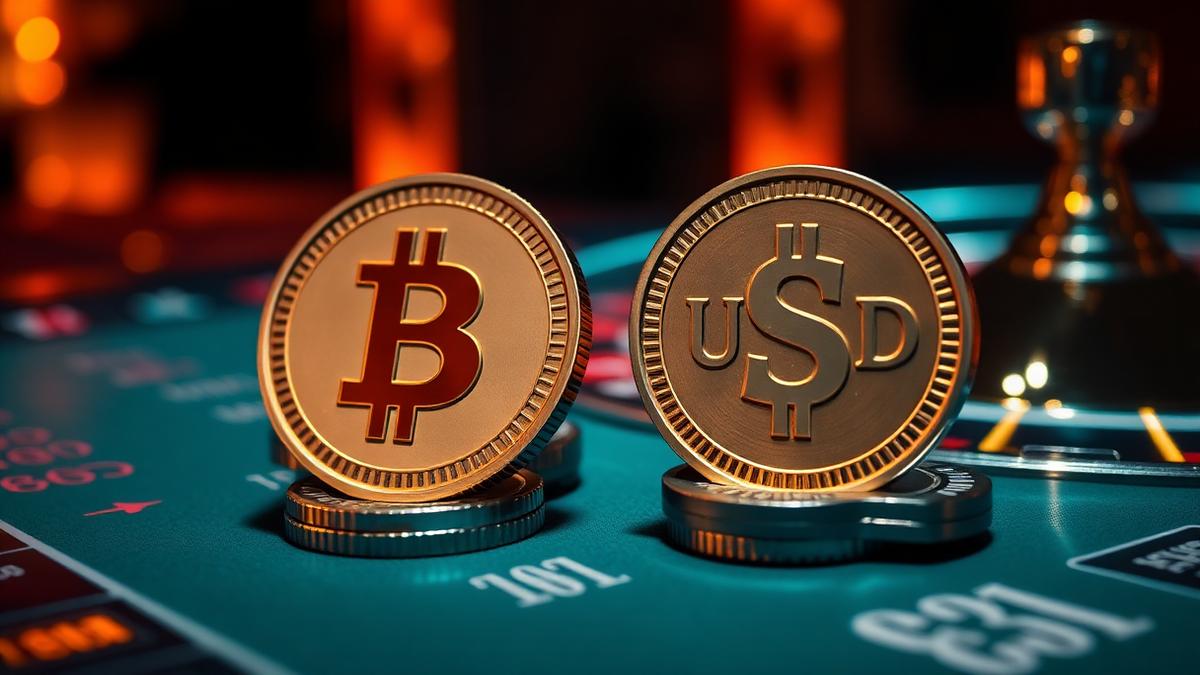
The digital green felt of the iGaming world is experiencing a seismic shift, and it’s not just about new game mechanics or immersive VR casinos. The very currency underpinning these operations is undergoing a profound transformation. For years, Bitcoin reigned supreme as the undisputed king of crypto casinos, offering anonymity, decentralization, and relative ease of transfer. However, as we pass the midpoint of the decade, a new paradigm is firmly taking hold: the ascendancy of stablecoins, specifically USDT and USDC, as the preferred medium of exchange. This isn't merely a trend; it's a fundamental re-evaluation of digital asset utility within a rapidly maturing industry.
The Bitcoin Bottleneck: Slow Transactions and Volatility's Double-Edged Sword
Bitcoin’s early adoption in iGaming was driven by its pioneering status and fundamental characteristics. It offered a way to circumvent traditional banking rails, appealing to both operators seeking to serve new markets and players valuing privacy. For a time, its volatility was even seen as an intriguing element, promising potential gains on untouched bankrolls. However, as the crypto casino sector matured and expanded beyond early adopters, these very attributes began to present significant operational headaches.
Transaction speeds, while innovative for their time, have become a major bottleneck. A player depositing Bitcoin and waiting for multiple network confirmations can experience frustrating delays, directly impacting their immediate gaming experience. Imagine the friction when a high-stakes player wants to quickly top up their balance mid-session. The delay can mean lost potential wagers and, critically, a degraded user experience. Furthermore, the very volatility that once attracted some players has proven to be a significant deterrent for others, and a nightmare for operators.
"For over a decade, Bitcoin's price swings created an accounting challenge unique to crypto-first businesses," notes Dr. Anya Sharma, Head of Digital Assets at Quantum Wallets Inc. "Casinos had to constantly hedge against dramatic intraday value fluctuations, turning what should be a straightforward ledger into a highly dynamic, risk-laden balance sheet. This inherent instability was unsustainable at scale."
Operators faced immense pressure to either absorb these risks, which could lead to significant financial losses during a downturn, or pass them on to players through less favorable exchange rates, further eroding trust. The promise of borderless, instant money was often overshadowed by the practicalities of managing a highly unstable asset in a business requiring precision and predictability.
Stablecoins: The Anchor in a Volatile Sea
Enter USDT (Tether) and USDC (USD Coin), the titans of the stablecoin world. These tokens are designed to maintain a peg to a stable asset, primarily the US dollar, theoretically making one USDT or USDC always equal to one USD. This fundamental characteristic resolves the core issues that have plagued Bitcoin adoption in iGaming.
The stability offered by USDT and USDC is a game-changer for both casinos and players. For operators, it eliminates the onerous task of constant rebalancing and hedging. Revenue and liabilities can be accounted for in a stable, predictable manner, simplifying financial reporting, treasury management, and risk assessment. Imagine planning marketing budgets and calculating player payouts without the specter of a 15% currency fluctuation overnight. This predictability fosters greater operational efficiency and allows operators to focus on core business – providing compelling gaming experiences – rather than becoming currency traders.
For players, the benefits are equally compelling. They know precisely how much value they are depositing and how much they are withdrawing, free from the anxiety of their funds diminishing during network confirmation times or while sitting idle in their casino account. This translates to increased trust and a smoother, more conventional financial experience within an otherwise innovative payment ecosystem. The psychological comfort of seeing 100 USDC in an account genuinely represent 100 US dollars is invaluable.
Technological Advancements and Ecosystem Integration
Beyond price stability, the technological underpinnings and widespread ecosystem integration of stablecoins further cement their dominance. While typically operating on robust blockchains like Ethereum and Tron, stablecoins often leverage layer-2 solutions or optimized networks, leading to significantly faster and cheaper transactions compared to Bitcoin's mainnet. A typical USDT or USDC transaction can confirm in seconds for a fraction of the cost, directly addressing Bitcoin’s speed and fee limitations. This allows for near-instant deposits and withdrawals, a critical factor in player satisfaction and retention in the fast-paced iGaming environment.
Furthermore, the integration of stablecoins into the broader crypto financial world is extensive. They are widely trading on almost every major exchange, supported by countless wallets, and increasingly accepted by various merchants outside of iGaming. This ubiquitous accessibility lowers the barrier to entry for new crypto casino players and provides existing ones with familiar avenues for acquisition and off-ramping of funds. The seamless flow of stablecoins from a player's exchange account to a casino wallet, and vice-versa, makes the entire process incredibly user-friendly, mimicking the efficiency of traditional fiat transfers but with the advantages of blockchain technology. This ease of use is a significant competitive differentiator for casinos embracing stablecoins.
The Regulatory Compass and Future Outlook
The regulatory landscape surrounding cryptocurrencies is notoriously complex and ever-evolving. While Bitcoin's decentralized nature initially offered a perceived shield from traditional financial oversight, regulators are increasingly turning their attention to the entire digital asset space. Here, stablecoins, albeit under intense scrutiny, present a more structured path forward. Their direct peg to fiat currencies often means they fall under specific regulatory frameworks designed for digital money or e-money, providing a clearer, albeit stricter, operational path compared to purely volatile, unbacked cryptocurrencies. Operators dealing with stablecoins may find it easier to demonstrate compliance with AML (Anti-Money Laundering) and KYC (Know Your Customer) regulations, as the underlying asset is often subject to some form of audit or reserve backing. This, in theory, allows for greater transparency and could pave the way for more widespread crypto casino licensing in regulated markets.
Looking forward to 2026 and beyond, the trend is unequivocally towards stablecoin dominance in crypto iGaming transactions. While Bitcoin will likely retain a niche for maximalists and those prioritizing its specific ideological tenets, the operational realities of a high-volume, global industry will continue to favor stability and speed. We will likely see further innovation in stablecoin technology, perhaps new collateralization models or privacy-preserving features. The future of crypto casinos is not just about playing with digital money; it’s about doing so efficiently, predictably, and securely, and in that arena, USDT and USDC are the undeniable champions shaping the next era of online gambling.
The Road Ahead for Operators
For iGaming operators, the message is clear: embracing stablecoins is no longer an option but a strategic imperative. Those still heavily reliant on Bitcoin as their primary crypto asset risk being outmaneuvered by competitors offering superior player experiences through faster transactions, stable account balances, and reduced volatility exposure. The focus must shift to optimizing payment gateways for stablecoins, educating players on their benefits, and building robust internal systems that capitalize on their inherent stability. The tables have turned, and the smart money is now firmly on USDT and USDC.
Upgrade Your Payment Gateway
Is your iGaming platform optimized for the future of crypto transactions? Explore BettingPair Analytics to understand current stablecoin adoption rates and benchmark your payment solutions against industry leaders. Don't let outdated infrastructure cost you market share.